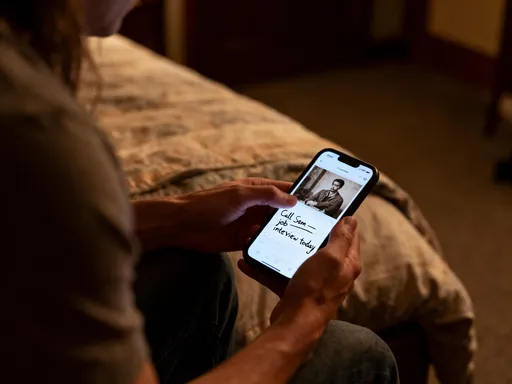
Why Are You Still Juggling Tasks When Your Phone Could Be Your Teammate?
How many times have you forgotten a deadline, missed a message, or felt overwhelmed by endless to-do lists? You’re not alone. Between work, family, and personal goals, staying on top of everything can feel impossible. But what if the device in your pocket could actually help you breathe easier? Not with more apps—but with smarter ways to connect, organize, and focus. Let’s talk about how online communities and simple tools are quietly transforming how we work—and live. This isn’t about becoming a tech expert. It’s about making your current tools work better for you, so you can spend less time managing chaos and more time enjoying what matters.
The Overwhelm Is Real: When Communication Spills Into Chaos
Imagine this: it’s 8 p.m., the kids are finally asleep, and you’re sitting on the couch with your laptop open. You’re trying to finish a work task, but your phone keeps buzzing—first a message from your sister, then a work chat alert, then a reminder about your son’s soccer practice tomorrow. You switch tabs, answer one message, then realize you forgot to reply to your colleague’s email from this morning. Your brain feels like it’s running ten marathons at once. Sound familiar? That constant switching between tasks, messages, and responsibilities isn’t just annoying—it’s exhausting. And it’s not your fault. The tools we use every day were supposed to make life easier, but too often, they’ve turned into sources of stress.
Think about how many places you get information from: text messages, email, social media, work platforms, family group chats. Each one pulls your attention in a different direction. You might start the day with good intentions, but by mid-afternoon, you’ve lost track of what you promised to do, who you were supposed to call, or whether you even ate lunch. The real cost isn’t just time—it’s mental energy. Every time you switch from one app to another, your brain has to reset. That’s called context switching, and research shows it can reduce productivity by as much as 40 percent. But here’s the good news: it doesn’t have to be this way. The solution isn’t more tools. It’s using what you already have in a more intentional way.
I remember when I first realized how much mental clutter I was carrying. I had two work projects due, a dentist appointment for my daughter, and a potluck at school—all on the same day. I had reminders everywhere: sticky notes on my fridge, calendar alerts, texts to myself. But somehow, I still showed up late, forgot the dish I promised to bring, and sent an incomplete report. That night, I sat down and asked myself: why am I working so hard just to keep up? That moment was a turning point. I started looking not for more apps, but for smarter ways to streamline. And what I discovered wasn’t complicated—it was about connection, not clutter.
From Noise to Focus: How Online Communities Redefine Collaboration
One of the biggest sources of stress isn’t just the number of tasks—it’s the lack of clarity. Who’s doing what? When is it due? What’s the latest update? When these questions aren’t answered clearly, confusion sets in, and people start repeating work or missing deadlines. That’s where online communities can make a real difference. And no, I don’t mean random Facebook groups or endless Reddit threads. I’m talking about focused, purpose-driven spaces where people come together around a shared goal—like a work team, a parenting group, or a volunteer committee.
Take the example of a small design team I worked with remotely. They were spread across three time zones and used to rely on email and sporadic calls. Meetings were long, decisions got delayed, and someone always missed an update. Then they moved their collaboration to a shared online workspace—a simple platform where everyone could post updates, upload files, and comment in one place. No more digging through inboxes. No more waiting for replies. Each morning, team members would log in, see what had changed, and know exactly what to focus on. The shift wasn’t about the tool itself—it was about creating a single source of truth.
What made it work wasn’t just technology. It was the rhythm they built around it. They set clear expectations: updates posted by 9 a.m. their local time, responses within 24 hours, and weekly check-ins to review progress. Because everyone knew where to look, they didn’t have to stay online all day. They could focus on their work, trust that information was available when they needed it, and log off without anxiety. That’s the power of a well-organized community—not constant connection, but reliable, low-pressure communication.
And this isn’t just for work. Imagine a family using a similar approach. Instead of five different texts about who’s picking up the kids or what’s for dinner, everyone checks one shared space. It reduces the mental load, prevents misunderstandings, and gives you back the peace of knowing you’re not missing anything important. The goal isn’t to be online more—it’s to be stressed less.
Your Phone as a Partner, Not a Distraction
We’ve all been taught to see our phones as the enemy of focus. Notifications pop up, we get pulled into social media, and suddenly an hour has vanished. But what if we stopped fighting our devices and started working with them? Your phone doesn’t have to be a source of distraction. It can actually help you stay grounded, remember what matters, and move through your day with more ease.
The key is using smart features that align with your natural rhythm. For example, have you ever set a reminder that says “Buy milk” but shows up at 3 p.m. when you’re in a meeting? Frustrating, right? But what if that reminder only popped up when you walked into the grocery store? That’s location-based reminders, and they’re a game-changer. You can set your phone to remind you to call your mom when you leave work, or to pick up dry cleaning when you’re near the shop. It’s like having a quiet assistant who knows your habits and speaks up at just the right moment.
Another powerful tool is AI-powered prioritization. Some apps now learn from your behavior—what tasks you finish quickly, which ones you delay, when you’re most active—and use that to suggest what to focus on next. It’s not about replacing your judgment. It’s about giving you a nudge when you’re feeling stuck. I started using this when I was preparing for a big presentation. Instead of staring at a long to-do list, my phone suggested breaking it into smaller steps and working on the outline first, based on when I usually did my best thinking. It felt like someone finally understood how I work.
The trick is to set these up once and let them run quietly in the background. You don’t need to check your phone every five minutes. You just need to trust that it’s working for you. And when it does, it frees up mental space. You stop asking yourself, “What should I do next?” and start feeling more in control of your time. That’s not magic—it’s just your phone finally acting like a teammate.
The Magic of Shared Calendars and Silent Check-Ins
One of the most powerful yet underrated tools for reducing stress is the shared calendar. Think about how many times a simple scheduling mix-up has caused frustration—showing up late to an event, double-booking your time, or realizing too late that someone else had a conflict. These aren’t just small mistakes. They chip away at trust and create unnecessary tension, especially in families or close-knit teams.
A shared calendar changes that. When everyone can see the big picture—school events, work deadlines, doctor appointments, even grocery runs—it becomes easier to plan, support each other, and avoid last-minute surprises. I started using one with my family two years ago, and it’s transformed how we communicate. My husband can see when I have a meeting, so he knows not to schedule something else. My teenage daughter checks it before making plans with friends. Even our babysitter uses it to confirm dates. We don’t have to text back and forth—we just look.
But it’s not just about seeing dates. It’s about silent check-ins—those small, automatic updates that keep everyone informed without requiring a conversation. For example, some teams use status updates like “Working on report,” “In meetings until 3,” or “Out of office.” These aren’t long messages. They’re quick signals that reduce the need for “Hey, are you there?” texts. At home, we use a simple system: when someone arrives home, they tap a button in our family app, and everyone gets a quiet notification. No need to call out, “I’m back!”—we just know.
These tools don’t eliminate communication. They make it more meaningful. Instead of asking, “Did you get my message?” or “What are you doing right now?” we can focus on deeper conversations—how the day went, what’s on your mind, or what you need support with. That’s the real benefit: when the small stuff is handled quietly, the big stuff gets the attention it deserves.
Building Routines That Stick—With a Little Help From Others
We all have goals we want to reach—eating healthier, exercising more, being more present with our kids, or growing in our careers. But motivation fades. Life gets busy. And without support, even the best intentions can fall apart. That’s where online communities can help in a surprising way: by creating accountability through small, consistent actions.
Take the story of Maria, a mother of two who wanted to improve her time management. She joined a small online group of working moms focused on productivity. Every morning, members posted one thing they wanted to accomplish that day. At the end of the day, they shared what they completed—even if it was something small, like “answered all work emails” or “took a 10-minute walk.” Maria started doing the same. At first, it felt silly. But over time, something shifted. Seeing others post their wins made her want to contribute. The encouragement she received—simple comments like “Great job!” or “You’ve got this!”—kept her going on tough days.
Within a month, she wasn’t just finishing tasks—she was planning them better, setting realistic goals, and feeling more in control. The group didn’t give her new tools. It gave her consistency. And that’s the secret: progress often comes not from big breakthroughs, but from small, repeated actions supported by community.
You don’t need a huge network. Even a small circle of trusted people—friends, colleagues, or family—can make a difference. Try starting a weekly check-in with a friend where you share one goal and one win. Or join a local group focused on a shared interest. The point isn’t perfection. It’s showing up, being seen, and knowing you’re not alone. When you do that, even the most overwhelming goals start to feel possible.
Choosing Tools That Fit Your Life, Not the Other Way Around
With so many apps and platforms out there, it’s easy to feel like you need the latest, most advanced tool to stay on track. But the truth is, the best tool isn’t the fanciest one—it’s the one you’ll actually use. That means prioritizing simplicity, privacy, and real-world usefulness over flashy features or trendy designs.
When I’m choosing a tool, I ask myself three questions: Is it easy to use? Does it respect my time? And does it solve a real problem I have? If the answer to any of those is no, I skip it. For example, I tried a project management app that had every feature imaginable—timers, charts, integrations, you name it. But it took me 20 minutes just to log in and update a task. I abandoned it within a week. On the other hand, a simple shared to-do list that lets me check off items with one tap? I’ve used it for over a year.
Privacy matters too. I don’t want every detail of my schedule or tasks being stored in a place I can’t control. I look for tools that let me decide what to share and with whom. And I set boundaries—like turning off non-essential notifications, scheduling specific times to check updates, and never bringing work apps into my personal downtime. These small choices add up. They ensure that technology serves me, not the other way around.
Remember, you’re not trying to become a digital minimalist or a tech guru. You’re just trying to make your life a little easier. So don’t feel pressured to adopt every new tool. Start with one—maybe a shared calendar, or a daily check-in group—and see how it feels. If it helps, keep it. If it doesn’t, let it go. The goal is progress, not perfection.
Working Smarter, Living Better: The Ripple Effect of Small Changes
When we talk about productivity, it’s easy to focus only on getting more done. But the real benefit of using technology wisely isn’t just efficiency—it’s peace of mind. It’s waking up without that knot of anxiety about what you might forget. It’s being able to focus on your child’s story at dinner instead of worrying about an unfinished task. It’s feeling confident that you’re showing up for the people and goals that matter most.
Small changes in how you use your tools can create a ripple effect. When you reduce mental clutter, you have more space for creativity, connection, and calm. When you build routines with support, you develop confidence in your ability to follow through. And when you let your phone work with you instead of against you, you reclaim time—and energy—for the things that bring you joy.
I’ve seen this in my own life. Since simplifying how I use technology, I’ve not only been more productive at work—I’ve also been more present at home. I’m less reactive, less overwhelmed, and more intentional about how I spend my time. And I know I’m not alone. So many women I’ve talked to have found similar relief just by making one or two small shifts—using a shared calendar, joining a supportive group, or setting up smarter reminders.
You don’t need to overhaul your entire system. You just need to start. Pick one thing that’s causing friction—maybe the constant texts, the missed deadlines, or the feeling of always playing catch-up—and try a new approach. Let your phone remind you when you’re near the pharmacy. Share your family’s schedule in one place. Post one small win in a group this week. These aren’t grand gestures. They’re quiet acts of care—for your time, your mind, and your well-being.
Technology will keep evolving. But your peace, your presence, and your confidence? Those are what really matter. And with the right tools used the right way, you can have more of all three. So take a breath. You’ve got this. And your phone? It’s not just a device. It’s your teammate, waiting to help you live a calmer, clearer, more connected life.