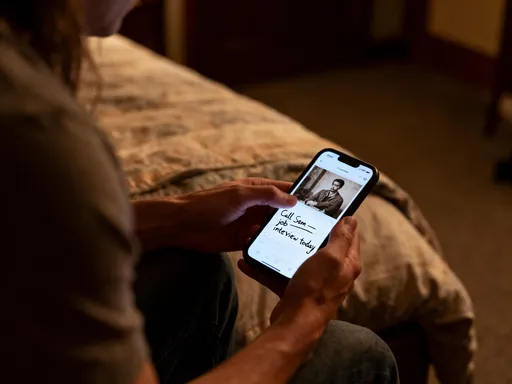
From Forgotten Phones to Family Treasures: How Photo Apps Gave Our Moments Meaning
You know that feeling when you scroll through your phone, lost in a blur of random snaps—kids laughing, holidays half-remembered, meals you can’t even place? I did too—until I realized those photos weren’t just clutter. They were fragments of our story. With the right app, chaos turned into connection. Now, sharing a simple moment with my sister feels like handing her a piece of home. This isn’t just about storage—it’s about meaning, memory, and growing together, one photo at a time.
The Pile of Forgotten Moments: When Photos Lose Their Purpose
Let’s be honest—how many times have you searched for a photo and ended up lost in a sea of screenshots, blurry pet close-ups, and receipts? I’ve been there, more times than I can count. Last winter, my niece called me during a snowstorm, asking for pictures of her first Christmas. I promised I’d send them right away. Two hours later, I was still tapping, swiping, and muttering under my breath. The photo was somewhere—buried under a hundred others from the same weekend, mixed with grocery lists and random sunsets. When I finally found it, the moment had passed. She’d already gone to bed.
That wasn’t just a tech fail. It was a heartache. Because that photo wasn’t just a picture—it was proof she was loved, that she belonged, that someone had been paying attention. And I couldn’t deliver it in time. That night, I sat with my phone in my lap and asked myself: why do we work so hard to capture life, only to let those moments vanish into digital silence? We take photos to remember, to feel close, to mark time. But when they’re scattered across phones, tablets, old backups, and dusty SD cards, they stop feeling like memories. They start feeling like chores.
I’m not alone in this. So many of us are drowning in images we can’t access. We snap photos without thinking, assuming they’ll be there when we need them. But without a system, they become invisible. They don’t comfort us. They don’t connect us. They just sit there, like letters never opened. And over time, we stop looking. We forget to look. We stop believing our own lives are worth revisiting. That’s not what photography was meant to do. It was supposed to help us feel more alive, not more lost.
Discovering the Right App: More Than Just a Digital Album
My turning point came on a quiet Sunday morning. I was sipping tea, scrolling without purpose, when I stumbled on a feature I’d ignored for years—face recognition in a photo app I already had. I tapped it, curious. And then—there they were. A whole album of my daughter, just from the past year. Not mixed with random group shots or blurry background moments. Just her. Smiling. Crying. Laughing with cereal in her hair. I hadn’t seen these photos together before. I didn’t even know they existed as a set. And suddenly, I was crying into my mug.
That was the moment I realized: this wasn’t just about organizing pictures. It was about reclaiming my family’s story. The app wasn’t showing me files—it was showing me time. It had grouped moments by location, by date, by people. A weekend at the lake? There it was. My husband fixing the porch swing? Automatically saved together. Even our dog had his own little collection. It wasn’t magic. It was smart design—technology that worked quietly in the background, like a kind friend sorting through your attic for you.
What surprised me most was how easy it felt. I didn’t have to label everything. I didn’t need to rename files or create folders. The app learned as I used it. I tapped “Grandma” on a few photos, and soon, every picture of her appeared in one place. I added captions—“First pancake flip!” or “Beach day with Aunt Lisa”—and those little notes became part of the memory. It wasn’t about perfection. It was about presence. And slowly, my phone stopped feeling like a cluttered drawer and started feeling like a living photo album—one that remembered things I’d forgotten.
Building Connection Across Distances: Photos as Emotional Bridges
My mom lives three states away. She’s healthy, sharp as ever, but we don’t see each other as often as we’d like. Last spring, I started sharing a simple album with her—just little things. A shot of the tulips blooming in our yard. My son trying broccoli for the first time. A rainy afternoon with books and hot chocolate. Nothing grand. But every time she opened it, she called me. “I felt like I was right there,” she’d say. “Like I got to be part of your week.”
That’s when I realized photos aren’t just records—they’re invitations. An invitation to witness, to care, to belong. When I shared a video of my daughter singing off-key in the bathtub, my sister replied, “I needed that today.” She was going through a rough patch at work, and that 20-second clip gave her a smile. It didn’t fix her problems, but it reminded her she wasn’t alone. That’s the quiet power of shared moments. They don’t have to be polished. They just have to be real.
During the holidays, we created a family album that everyone could add to. My brother posted a throwback of us building a snowman when we were kids. My cousin added a photo of her newborn wrapped in the same blanket I’d used for my son. We didn’t plan it. We didn’t coordinate. But seeing those images side by side? It felt like a hug. One night, my nephew commented, “You were all there, even when you weren’t.” And he was right. We weren’t physically together, but our lives were overlapping in the most beautiful way. The app didn’t create those feelings—but it gave them a place to live, to grow, to be seen.
Daily Growth Through Reflection: Seeing Yourself Change
We don’t always notice how much we change until we see it with our own eyes. Last year, I scrolled back through 12 months of “morning coffee” photos—just random snaps I took while waiting for the kettle. At first, I thought, Why did I even keep these? But as I moved through them, I started to see patterns. The winter months were darker, quieter. My robe was always on, my hair messy, my expression tired. By spring, the light changed. I was outside more. Smiling more. Even my clothes got brighter.
It wasn’t just about mood. It was about growth. I saw myself trying new things—yoga in the backyard, gardening with my son, cooking meals I’d never attempted before. I saw setbacks too—a week where I didn’t leave the house, a month where I barely took any photos at all. But instead of feeling guilty, I felt compassion. That was me, doing my best. And the fact that I kept going? That was worth remembering.
Photo apps helped me become my own witness. Not in a judgmental way, but in a gentle, loving one. When I looked back at a year of small moments, I didn’t see perfection. I saw persistence. I saw joy sneaking in through the cracks. I saw a woman who showed up, even when she didn’t feel like it. And that changed how I saw myself. I started taking more photos—not for social media, not for likes, but for me. To remind myself: I am here. I am growing. I am becoming.
Teaching the Next Generation: Memories as Life Lessons
My daughter is seven, and she already takes more photos than I did at twice her age. At first, I worried—was she just snapping for fun? Was she even paying attention? Then I started looking at her favorites. She’d saved pictures of her grandmother’s hands kneading dough. A rainbow after a storm. Me laughing so hard I was crying. She wasn’t just taking photos. She was choosing what mattered.
So we began using the app together. Every Sunday, we pick three photos from the week and add them to a shared album called “Our Year.” We write little notes—why the moment mattered, what we felt, who was there. It’s become our quiet ritual. One night, she looked at a photo of her great-grandmother’s birthday last year and said, “I remember how she smelled like roses. I miss her.” That moment wasn’t just memory—it was connection. It was grief, love, and continuity, all wrapped in a single image.
These albums are becoming her emotional compass. When she’s sad, we look back at happy times. When she’s proud, we celebrate by adding the photo to her “I Did It!” collection. She’s learning that feelings pass, but memories stay. She’s learning that her life has a story—and she gets to be the storyteller. And when she grows up, she won’t have to search through dusty boxes to know where she came from. She’ll have a living archive of love, built one photo at a time.
Practical Magic: Simple Routines That Keep Memories Alive
You don’t need to be tech-savvy to make this work. I’m not. I still mix up cloud storage and backups half the time. But I’ve found a few simple habits that keep the magic going without adding stress. First, I turned on auto-backup. That one step alone saved me from panic when I dropped my phone in the sink last summer. Everything was safe, synced, and waiting when I got a new one.
Second, I set a weekly reminder—every Sunday evening—to spend 10 minutes with my photos. I delete the blurry ones, add names to faces, and pick a favorite to share. It’s not a big task, but it keeps the momentum going. I also created shared albums for different parts of my life—“Family Sundays,” “Mom & Me Walks,” “Holiday Traditions.” Naming them makes them feel special, not just functional.
Another small but powerful habit? I let my kids add to the albums too. They love it. They feel included. And their choices surprise me—sometimes it’s a bug they found, sometimes it’s me hugging them from behind. Their perspective teaches me what really matters. I also use voice captions. When I’m driving, I’ll say, “This is the day we saw three deer on the trail,” and the app saves it with the photo. Later, hearing my own voice describe the moment? It’s like time travel.
The key is consistency, not perfection. You don’t have to do it all at once. Start with one album. Pick one person you want to share with. Save one photo a week. These tiny actions build a lifetime of connection. And the best part? The app does most of the heavy lifting. You just have to show up.
A Life Well-Remembered: Why This Matters Beyond the Screen
At the end of the day, this isn’t really about technology. It’s about love. It’s about saying, “I saw you. I remembered you. You matter.” In a world that moves too fast, photo apps give us a way to slow down, to look back, to say, “This was real. This was ours.” They don’t replace real moments—but they help us hold onto them.
I used to think organizing photos was a technical task. Now I know it’s an act of care. Every time I name a face, every time I share an album, every time I scroll back through a year of ordinary days, I’m saying: this life is worth remembering. My family is worth remembering. I am worth remembering.
And that changes everything. It gives me peace. It gives me perspective. It reminds me that even on the hard days, there are moments of beauty hiding in plain sight. A smile. A shared meal. A quiet hug. These aren’t small things. They’re the fabric of a life well-lived.
So if you’re sitting there with a phone full of forgotten photos, I want you to know: it’s not too late. You don’t need a perfect system. You don’t need to be a tech expert. You just need to start. Pick one photo today that makes your heart smile. Save it. Share it. Let it remind you of who you are and who you love. Because the story you’re living? It’s already beautiful. And it deserves to be seen.